
For many homeowners, the backyard is a missed opportunity. What should be a vibrant extension of the living room—a place for children to play safely, adults to unwind, and families to gather for weekend barbecues—often becomes an overgrown wasteland. When a yard is surrendered to dense brush, invasive vines, uneven terrain, and hazardous dead trees, it effectively robs a family of valuable square footage and shrinks their usable living space.
Stepping out onto a back porch only to stare at a chaotic tangle of weeds and hidden tripping hazards can feel incredibly discouraging. The psychological barrier of not knowing where to start often leads to years of procrastination, while the outdoor square footage continues to disappear under a wave of neglect. However, reclaiming this territory is one of the most rewarding home improvement projects you can undertake, yielding massive returns in property value, mental well-being, and family memories.
The transition from an intimidating jungle to a polished, functional family sanctuary requires a strategic, step-by-step approach. You cannot simply sprinkle some grass seed and hope for the best; you must methodically strip away the chaos, correct structural earth issues, and build an intentional canvas. This in-depth guide will provide a clear, professional roadmap to help you navigate site mapping, vegetation management, heavy excavation, and debris disposal, empowering you to unlock your land’s true potential.
Setting the Legal and Structural Boundaries: Mapping Your Property Safely

Before a single piece of heavy machinery rolls into your yard, or a single shovel strikes the dirt, you must establish an absolute baseline of geographical and legal reality. The enthusiasm for wanting to clear out a chaotic space can easily blind homeowners to the invisible boundaries and subterranean infrastructures that dictate property safety. Proceeding without this crucial introductory data can result in catastrophic utility ruptures, expensive property damage, or tense legal battles with neighbors.
The first critical task is determining precisely where your property lines end. Over several decades, fences can sag, hedges can wander, and oral agreements between previous owners can blur the true legal definitions of a lot. Accidentally cutting down a mature hardwood tree or removing a retaining wall that technically belongs to an adjacent neighbor can expose you to severe financial and legal liabilities.
To secure absolute legal clarity and peace of mind, you must enlist the services of professional land surveyors. A licensed professional will research your property’s historical deed registry, locate the original iron pins buried in the earth, and mark your boundaries with bright, undeniable precision. This certified survey map provides several structural benefits for your upcoming transformation:
- Zoning Compliance: It ensures that any future permanent fixtures you build, such as wooden decks, detached storage sheds, or concrete patios, respect municipal setback laws.
- Easement Protection: It clearly outlines any municipal utility easements on your land, preventing you from planting trees or building heavy structures over areas where city technicians might need access.
- Neighbor Relations: It provides indisputable, legal documentation that prevents minor border disputes from derailing your project’s momentum.
Simultaneously, you must map the unseen assets running beneath your lawn. Modern backyards are crisscrossed by a delicate web of pressurized natural gas lines, main water supply feeds, high-voltage electrical conduits, and fiber-optic communication cables. Striking a gas line with a mechanical excavator is an immediate life-safety hazard, while severing a main internet line can disconnect your entire neighborhood. Always dial your local underground utility locating service well in advance of construction, allowing technicians to spray-paint the exact subterranean path of every active utility hookup crossing your dirt.
Clearing the Overgrowth: Opening Up Daylight and Maximizing Raw Square Footage
With your legal boundaries secured and utility pathways clearly marked, you can safely begin the physical phase of reclamation. The most immediate obstacle holding back your backyard is usually a dense wall of wild, unchecked vegetation. Invasive vines like English ivy or kudzu, thorny blackberry briars, and wild saplings can weave together over time, forming an impassable green barrier that swallows sunlight and chokes out healthy soil.
Thinning out this chaotic undergrowth does wonders for the local micro-climate of your property. When dense brush completely smothers the ground, it traps ambient humidity, rots the topsoil, and creates a pristine breeding ground for wood-boring pests, ticks, and rodents. Opening up the canopy lets raw daylight hit the earth, drying up swampy pockets and creating the necessary environment for a healthy family lawn to thrive.
For properties buried under decades of severe, woody neglect, manual loppers and consumer-grade lawnmowers will quickly fail. Reclaiming a heavily choked perimeter requires an aggressive, systematic land and lot clearing strategy. This process involves utilizing specialized commercial machinery, such as heavy-duty brush hogs and forestry mulchers, which can grind down thick thickets and small saplings right down to the soil line in a single pass.
While a highly motivated homeowner can tackle lightweight weeds on a weekend, large-scale thickets demand commercial-grade efficiency. Partnering with a professional lot clearing service ensures that dense, tangled root systems are mechanically extracted rather than just shaved down to the surface. Professional crews use specialized equipment to lift out invasive root balls without stripping away the vital, nutrient-rich topsoil your family will need for future sod, garden beds, and landscaping.
Managing the Canopy: Removing Hazards and Sculpting Mature Tree Horizons
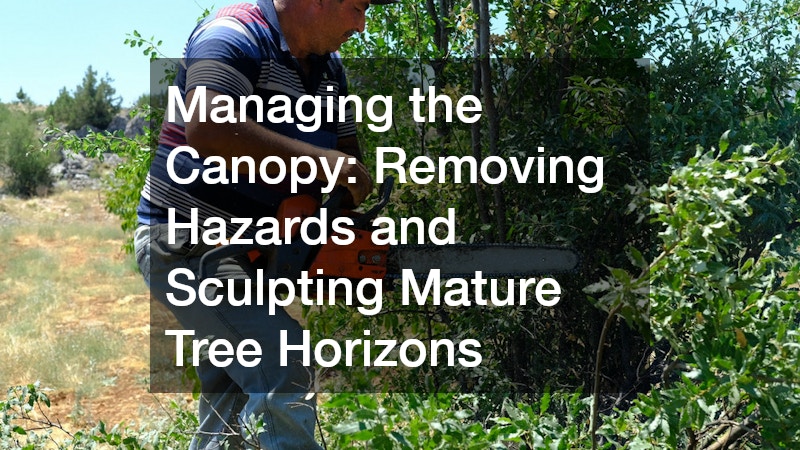
Once the ground-level brush is cleared away, your eyes will naturally look upward to the secondary layer of your yard’s infrastructure: the tree canopy. Mature trees are an extraordinary asset to a family home, providing cooling shade during intense summer afternoons, architectural beauty, and a natural habitat for local songbirds. However, when trees are neglected for long periods, they can transform into severe structural hazards that threaten your family’s safety.
Evaluating the physical health of your mature timber is a non-negotiable step before allowing children or pets to run free in the yard. You must look for signs of structural compromise, such as deep trunk cavities, fungal growth around the base, peeling bark, and completely bare branches in the middle of summer. A dead or dying tree is a ticking time bomb; high windstorms or heavy ice loads can easily cause massive limbs—or the entire trunk—to collapse onto your home, play sets, or boundary fences.
When dealing with large, hollow, or precariously leaning timber, attempting a DIY removal with a consumer chainsaw is a recipe for disaster. The unpredictable weight distribution of a dying tree requires the highly technical rigging, directional cutting, and advanced safety gear utilized during professional tree removals. Handing this high-risk task over to an insured, certified crew protects your home from accidental impact damage and eliminates the risk of personal injury.
Conversely, if a mature tree is verified to be healthy, you should do everything possible to preserve its canopy while making the ground space beneath it useful. This is achieved by raising the horizon of the lower branches, an arborist technique that cuts away low-hanging limbs to let light filter down to the lawn below. Investing in a recurring, professional tree trimming service allows you to sculpt a gorgeous, high-arching canopy that provides pristine shade while removing hazardous dead weight before it can drop during a storm.
Ground-Level Elimination: Conquering Underground Obstacles and Soil Prep
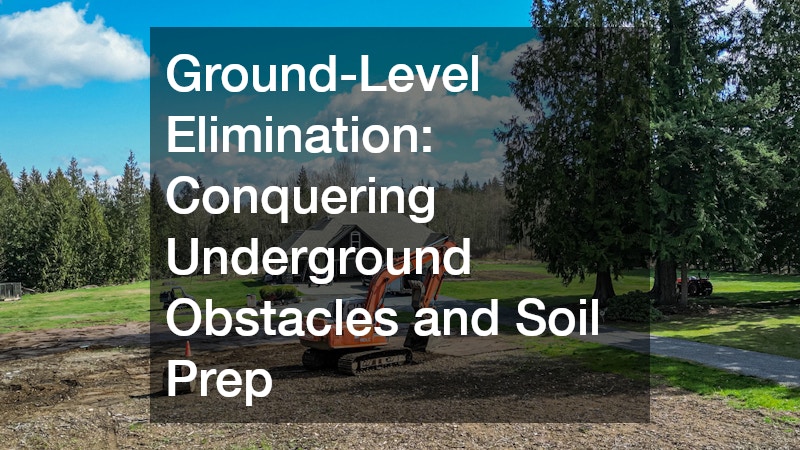
After the canopy is sculpted and dead timber is safely dropped, you are often left with a fresh landscape challenge: an army of leftover tree stumps jutting out from the dirt. Many homeowners mistakenly believe they can simply leave these stumps in place or hide them under a layer of topsoil. This is a critical mistake that will quickly derail your future backyard plans.
Leaving raw wood stumps scattered across your property creates a persistent, multi-layered problem for a family space. First, they represent a permanent safety hazard for children running at full speed or playing sports. Second, they can cause thousands of dollars in mechanical damage to lawnmower blades and structural axles. Finally, as a tree stump slowly decomposes over a decade, it becomes a literal magnet for destructive wood-boring insects like subterranean termites, carpenter ants, and beetles, providing them with a launching pad to migrate directly into your home’s wood framing.
The most permanent and non-destructive way to eliminate these underground obstacles is to bring in specialized grinding machinery. Utilizing professional stump grinding services allows you to pulverize the dense, heavy root ball down to twelve inches below the natural grade of the soil. This process converts the solid wood into a rich, fine mulch that you can easily scoop out, leaving behind a clean void that can be filled with fresh topsoil and seamlessly covered with uniform sod.
With the subsurface wood cleared away, you can focus on the literal foundation of your future layout: the soil consistency and contour. If your yard has experienced severe erosion, features large embedded fieldstones, or suffers from old construction ruts, you must smooth out the earth before building patios or playgrounds. Working with certified landscape excavation companies allows you to deploy heavy skid-steers and mini-excavators to reshape steep banks, fill old holes, and pull out heavy boulders. Partnering with professional landscape excavation companies guarantees that your soil is deeply tilled, properly amended, and compacted correctly to prevent uneven settling under your future hardscaping investments.
Controlling the Flow: Mastering Drainage and Orchestrating Waste Management
The final technical hurdle in reclaiming an unusable yard involves managing the invisible movement of rainwater across your property. A perfectly cleared, stump-free yard can still be completely unusable if its contours direct rainwater toward your home’s foundation or create a muddy, swampy marsh in the center of the lawn. Standing water ruins turfgrass, destroys root zones, and transforms your yard into a paradise for breeding mosquitoes.
Correcting these hydraulic errors requires a precise reconfiguration of the land’s pitch. Homeowners must look to a professional grading service to mechanically cut down high spots and fill in low depressions, ensuring the entire yard features a smooth slope that falls away from living spaces. A professional grading service can also integrate hidden drainage networks, such as French drains, catch basins, or dry creek beds, safely routing heavy storm runoff toward municipal drainage infrastructure without washing away your new landscaping.
The sheer volume of material generated during a complete backyard overhaul can be absolutely staggering. Between piles of extracted brush, pulverized tree mulch, old rotten fencing, shattered concrete paths, and excess dirt, you can easily accumulate multiple tons of unmanageable debris that can stall your project’s timeline if left in piles across your lawn.
To maintain a safe, efficient, and organized construction workspace, you must plan for bulk waste disposal from day one. Arranging for roll-off dumpster rentals is the easiest way to keep your property clear of tripping hazards and accumulating waste. Rather than making dozens of exhausting trips to a local landfill with a personal pickup truck, utilizing a reliable local dumpster rental company ensures that a heavy-duty steel container is dropped precisely where you need it and hauled away as soon as it is full. This streamlined waste management plan allows your family to focus entirely on the creative side of the build, knowing that the heavy cleanup logistics are handled seamlessly.
Conclusion
Transforming an overgrown, hazardous backyard into a clean, functional family oasis is an empowering journey that reclaims a massive asset for your household. While rewriting a chaotic landscape demands a significant investment of logistical planning, mechanical effort, and professional collaboration, the ultimate payoff is absolutely priceless. You are not simply clearing away brush and dirt; you are building an open, inviting outdoor canvas where your children can play safely, adults can decompress after a long workweek, and your family can connect with nature for decades to come.
True property preservation requires moving past temporary, reactive patches and embracing a structured, proactive vision. By mapping your property lines accurately, systematically clearing away choking overgrowth, securing your overhead tree canopy, eliminating buried stumps, and mastering your yard’s drainage contours, you establish a world-class foundation for your outdoor lifestyle. Stop surrendering your valuable property to neglect. Step outside today, evaluate your yard’s hidden potential, and begin assembling the team of local specialists who can transform your chaotic outdoor space into a beautiful, enduring family sanctuary.