
As the weather starts to warm up, ensuring that your air conditioner is ready for the spring season is crucial. After months of limited use, many cooling systems need attention before they can operate efficiently again. Proper preparation helps improve energy efficiency, extends the lifespan of the unit, and reduces the risk of unexpected breakdowns when temperatures rise. In this article, we will address common concerns and questions to help you get your air conditioner in top shape so you can enjoy reliable comfort throughout spring and into summer.
Why is Pre-Spring Maintenance Important for Your Air Conditioner?
The Benefits of Timely Maintenance
Pre-spring maintenance allows homeowners to address small issues before they become costly repairs. When an air conditioner runs efficiently, it uses less energy to cool the home, which can lead to lower utility bills.
Regular upkeep also helps maintain consistent indoor temperatures, improving overall comfort. By preparing early, you avoid the stress of system failures during the first heat wave when repair services are in high demand.
Identifying Potential Problems Early
Seasonal checks can uncover issues such as worn belts, low refrigerant levels, dirty coils, or loose electrical connections. These problems often develop slowly and may not be noticeable until the system is under heavy load. Detecting them early prevents further damage and reduces the likelihood of a complete system shutdown during peak usage.
Ensuring Optimal Performance
Routine maintenance tasks ensure that all components of the air conditioner work together properly. Clean parts allow for better airflow, accurate temperature control, and smoother operation. When the system is properly tuned, it cycles efficiently and maintains the desired temperature without excessive strain, which supports long term performance.
What Are the Key Steps in Preparing an Air Conditioner for Spring?
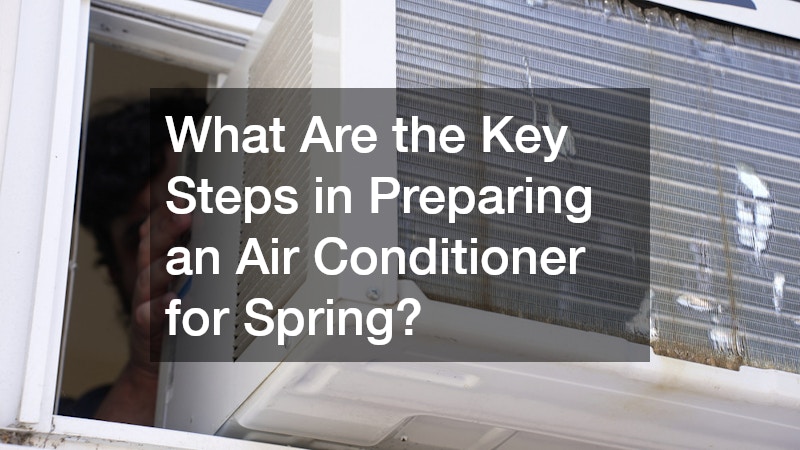
Cleaning or Replacing the Air Filters
Air filters play a vital role in maintaining indoor air quality and system efficiency. Over time, filters collect dust, pollen, and debris that restrict airflow. Before spring begins, inspect the filter and clean or replace it if necessary. Most filters should be replaced every one to three months depending on usage and household conditions. A clean filter allows the system to run efficiently and helps protect internal components from buildup.
Inspecting and Cleaning the Outdoor Unit
The outdoor condenser unit is exposed to the elements year round and often collects leaves, dirt, and other debris. Start by turning off the power to the unit. Remove any debris around the base and gently clean the fins using a garden hose. Check for visible damage such as bent fins or loose panels. Keeping the area around the unit clear improves airflow and helps the system release heat more effectively.
Testing the System Functions
Once basic cleaning is complete, turn the system on to test its operation. Set the thermostat to cooling mode and lower the temperature setting. Listen for unusual noises such as rattling or grinding, which may indicate mechanical issues. Make sure cool air is flowing from the vents and that the thermostat responds correctly. Testing early gives you time to address any concerns before warmer weather arrives.
How Often Should You Get Professional Air Conditioning Maintenance?
Understanding the Recommended Maintenance Schedule
Most manufacturers and HVAC professionals recommend servicing your air conditioner at least once a year, ideally in the spring. Annual maintenance helps keep the system running efficiently and ensures it meets manufacturer requirements for warranty coverage. Homes with older systems or heavy usage may benefit from more frequent inspections.
The Role of a Professional Inspection
While basic maintenance can be handled by homeowners, a professional inspection provides a deeper evaluation of the system. Trained technicians can check refrigerant levels, test electrical components, measure airflow, and identify wear that may not be visible. Scheduling residential HVAC services ensures that hidden issues are addressed and that the system is operating safely and efficiently.
Cost vs. Benefits of Professional Maintenance
The cost of routine maintenance is generally much lower than the expense of emergency repairs or premature system replacement. Regular servicing can extend the life of your air conditioner, improve energy efficiency, and reduce monthly cooling costs. Over time, these savings often outweigh the initial investment in professional maintenance.
Preparing your air conditioner for spring is a crucial step in ensuring effective and efficient cooling as temperatures rise. By understanding the importance of early maintenance, performing basic upkeep tasks, and scheduling professional inspections when needed, you can reduce the risk of breakdowns and improve overall comfort. A little effort now helps protect your system, saves money, and ensures a smooth transition into the warmer months ahead.